Books in English
A list of Timothy Garton Ash's books published in the UK and USA, with newer titles first:
Homelands
2023

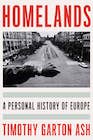
Out in paperback in 2024, updated with a new chapter.
Homelands is a stunning blend of contemporary history, reportage and memoir by our greatest writer about European affairs.
Drawing on half a century of travel and experience, Homelands tells the story of Europe in the later twentieth and early twenty-first centuries - how, having emerged from its wartime hell in 1945, it slowly recovered and rebuilt, liberated and united to come close to the ideal of a Europe 'whole, free and at peace'. And then faltered.
Humane, expert and deeply felt, Homelands is full of encounters, conversations and anecdote. It is also highly personal: Timothy Garton Ash has spent a lifetime studying and thinking about Europe and this book is full of life itself, from his father's experience on D-Day, to his teenage French exchange, to interviewing Polish dockers, Albanian guerrillas, and angry teenagers in the poorest quarters of Paris, as well as advising prime ministers, chancellors and presidents in the UK, Europe, and the US.
Homelands is both a singular history of a period of unprecedented progress and a clear-eyed account of how so much then went wrong, all the way from the financial crisis of 2008 to the war in Ukraine. It culminates in an urgent call to the citizens of this great old continent to understand and defend what we have collectively achieved.
The Magic Lantern
2019
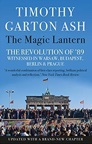
The Magic Lantern is one of those rare books that capture history in the making, written by an author who was witness to some of the most remarkable moments that marked the collapse of Communism in Eastern Europe.
Timothy Garton Ash was there in Warsaw, on 4 June, when the communist government was humiliated by Solidarity in the first semi-free elections since the Second World War. He was there in Budapest, twelve days later, when Imre Nagy - thirty-one years after his execution - was finally given his proper funeral. He was there in Berlin, as the Wall opened. And most remarkable of all, he was there in Prague, in the back rooms of the Magic Lantern theatre, with Václav Havel and the members of Civic Forum, as they made their 'Velvet Revolution'.
Free Speech: Ten Principles for a Connected World
2017
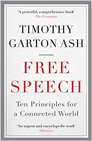
Never in human history was there such a chance for freedom of expression. If we have Internet access, any one of us can publish almost anything we like and potentially reach an audience of millions. Never was there a time when the evils of unlimited speech flowed so easily across frontiers: violent intimidation, gross violations of privacy, tidal waves of abuse. A pastor burns a Koran in Florida and UN officials die in Afghanistan.
Drawing on a lifetime of writing about dictatorships and dissidents, Timothy Garton Ash argues that in this connected world that he calls cosmopolis, the way to combine freedom and diversity is to have more but also better free speech. Across all cultural divides we must strive to agree on how we disagree. He draws on a thirteen-language global online project - freespeechdebate.com - conducted out of Oxford University and devoted to doing just that.
With vivid examples, from his personal experience of China's Orwellian censorship apparatus to the controversy around Charlie Hebdo to a very English court case involving food writer Nigella Lawson, he proposes a framework for civilized conflict in a world where we are all becoming neighbours.
Facts are Subversive
2009
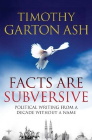
"During times of universal deceit", wrote George Orwell, "telling the truth becomes a revolutionary act." For twenty-five years, Timothy Garton Ash has travelled among truth-tellers and political charlatans to record, with scalpel-sharp precision, what he has found. This book confirms his reputation as our foremost cartographer of the present. Facts are Subversive contains Garton Ash's eye-witness accounts of the fate of countries, including Serbia, Poland and Ukraine, making the transition from authoritarianism to democracy, and his dispatches from places such as Egypt, Burma and Iran, where that transformation has yet to take place.
It also investigates freedom and its discontents. An encounter with the drug gangs of Sao Paulo raises questions about liberal democracy; a visit to New Orleans in the wake of Hurricane Katrina shows how quickly civilization can give way to chaos; while an examination of immigration in Europe raises profound questions about the limits of multiculturalism. Facts are Subversive also includes Garton Ash’s reportage on the American presidential election of 2008 and his assessments of what Barack Obama will mean for United States and the world.
Free World
2004
At the beginning of the twenty-first century, the world plunged into crisis. What began as an attack on the West by Osama bin Laden soon became a dramatic confrontation between Europe and America.
Britain has found itself painfully split, because it stands with one foot across the Atlantic and the other across the Channel. The English, in particular, are divided politically between a Right that argues our place is with America, not Europe, and a Left that claims the opposite. This is today’s English civil war. Both sides tell us we must choose. In this powerful new work Timothy Garton Ash, one of our leading political writers, explains why we cannot, need not and must not choose between Europe and America.
Drawing on an extraordinary range of sources, from unique conversations with leaders such as Bush, Blair and Schröder to encounters with farmers in Kansas and soldiers in Aldershot, from history, memoir and opinion polls to personal observations based on a quarter-century of travelling in Europe and the US, he demolishes the popular claim that Americans are from Mars and Europeans are from Venus. He shows why Washington can never rule the world on its own, why the new, enlarged Europe can only realise its aspirations in a larger, transatlantic community, and why the torments of the Middle East and the developing world can only be addressed by working together. To remain true to itself, the West must go beyond itself.
In fact, this crisis reveals a historic opportunity for free people everywhere to advance together from the cold war West to a new international order of liberty. Defying conventional wisdom and eschewing easy answers, this timely, provocative book should be read not just by those who purport to lead and inform us, but by anyone who wishes to be a citizen of a free world.
See the book's companion website for more information, and debate centred around the book's topics: FreeWorldWeb.
History of the Present: Essays, Sketches and Despatches from Europe in the 1990s
2000
The 1990s. An extraordinary decade in Europe. At its beginning, the old order collapsed along with the Berlin Wall. Everything seemed possible. Everyone hailed a brave new Europe. But no one knew what this new Europe would look like. Now we know. Most of Western Europe has launched into the unprecedented gamble of monetary union, though Britain stands aside. Germany, peacefully united, with its capital in Berlin, is again the most powerful country in Europe. The Central Europeans - Poles, Czechs, Hungarians - have made successful transitions from communism to capitalism and have joined NATO. But farther east and south, in the territories of the former Soviet Union and the former Yugoslavia, the continent has descended into a bloody swamp of poverty, corruption, criminality, war, and bestial atrocities such as we never thought would be seen again in Europe.
Timothy Garton Ash chronicles this formative decade through a glittering collection of essays, sketches, and dispatches written as history was being made. He joins the East Germans for their decisive vote for unification and visits their former leader in prison. He accompanies the Poles on their roller-coaster ride from dictatorship to democracy. He uncovers the motives for monetary union in Paris and Bonn. He walks in mass demonstrations in Belgrade and travels through the killing fields of Kosovo. Occasionally, he even becomes an actor in a drama he describes: debating Germany with Margaret Thatcher or the role of the intellectual with Václav Havel in Prague. Ranging from Vienna to Saint Petersburg, from Britain to Ruthenia, Garton Ash reflects on how "the single great conflict" of the cold war has been replaced by many smaller ones. And he asks what part the United States still has to play. Sometimes he takes an eagle's-eye view, considering the present attempt to unite Europe against the background of a thousand years of such efforts. But often he swoops to seize one telling human story: that of a wiry old farmer in Croatia, a newspaper editor in Warsaw, or a bitter, beautiful survivor from Sarajevo.
His eye is sharp and ironic but always compassionate. History of the Present continues the work that Garton Ash began with his trilogy of books about Central Europe in the 1980s, combining the crafts of journalism and history. In his Introduction, he argues that we should not wait until the archives are opened before starting to write the history of our own times. Then he shows how it can be done.
The File: A Personal History
1997

In 1978 a romantic young Englishman took up residence in Berlin to see what that divided city could teach him about tyranny and freedom. Fifteen years later Timothy Garton Ash - who was by then famous for his reportage of the downfall of communism in Central Europe - returned. This time he had come to look at a file that bore the code-name "Romeo." The file had been compiled by the Stasi, the East German secret police, with the assistance of dozens of informers. And it contained a meticulous record of Garton Ash's earlier life in Berlin.
In this memoir, Garton Ash describes what it was like to rediscover his younger self through the eyes of the Stasi, and then to go on to confront those who actually informed against him to the secret police. Moving from document to remembrance, from the offices of British intelligence to the living rooms of retired Stasi officers, The File is a personal narrative as gripping, as disquieting, and as morally provocative as any fiction by George Orwell or Graham Greene. And it is all true.
In Europe's Name: Germany and the Divided Continent
1993

This well-documented and detailed account of German reunification spans the period from Yalta right up to 1990 when the Berlin Wall crumbled and East Germans poured through the crack to the West. Ash, author of numerous books on Central Europe, uses mostly German source documents, many of which became available only recently with the collapse of East Germany. The centerpiece of his book is the history of "ostpolitik" and how it fit into West German foreign policy goals, especially toward the Soviet Union and Eastern Europe. Ostpolitik is also analyzed as a strictly German response to the so-called German question. West Germany's relations with the United States take a back seat to Bonn's relations with the Soviet Union, East Germany, and Europe as a whole.
The Uses of Adversity: Essays on the Fate of Central Europe
1989
During the historic changes in Central Europe in the 1980s, the author travelled behind the iron curtain, talking to dissidents and ordinary people and discovering the subterranean movements that were to erupt in 1989.
The Polish Revolution: Solidarity
1983
In August 1980, workers occupied the Lenin Shipyard in Gdansk and won from their communist rulers the right to form independent trades unions - a concession unprecendented in the history of the communist world. In this eyewitness account Timothy Garton Ash describes the brave defiance of the strikers, the emergence of an improbable leader and hero in Lech Walesa and the tumultuous events of the next sixteen months, culminating in the declaration of martial law.
His lucid and profound analysis explores key questions such as: Why did the revolution happen in Poland? What was the relationship between Solidarity and the communist regime? What changes did it bring about in the whole Soviet bloc? How did the West react to Solidarity?
In a new postscript written specially for the new edition, Timothy Garton Ash discusses Solidarity's long underground struggle, its triumphant return in 1989 and the ironies of its subsequent fate.